Defence & Security
Sovereign XR for the Indian Armed Forces.
We build the architecture. You define the mission. QWR provides defence-grade head-worn computing, designed, engineered, and manufactured in India — a sovereign supply chain with no foreign dependencies and 100% Indian-origin IP.
MIL-STD
810H pre-compliant
DAP
Buy Indian (IDDM)
100%
Indian-origin IP
JSS 55555
Pre-compliance
Indigenous & compliant
Positive Indigenization List ready.
"Buy Indian (IDDM)" is the top-preference category in India's Defence Acquisition Procedure — it requires equipment to be indigenously designed, developed, and manufactured, not just assembled or license-built from an imported design. That's the category QWR's hardware is built to qualify for from the ground up: the Pune facility does the manufacturing, the IP is sovereign Indian IP with no foreign-sourced firmware, and there's no foreign OEM design underneath it to disclose. For a procurement officer, that's the difference between specifying under the highest-preference acquisition category and having to justify a lower one. QWR devices are also eligible for iDEX (Innovations for Defence Excellence) and DISC programmes, aligned with Army Design Bureau requirements.
"Pre-compliance" means the design and engineering already account for JSS 55555 and MIL-STD-810H's requirements — shock, vibration, temperature, humidity, EMI/EMC — ahead of the formal accredited-lab test campaign a program office would specify before induction. It isn't a substitute for that formal certification; it's what keeps a design from needing rework once that testing starts, since the environmental and EMI/EMC requirements were the design brief from day one, not a retrofit.
Exporting outside India?
We publish a full certification roadmap for FCC (US), UKCA (UK), CE (EU), and ISED (Canada) markets.
Integrated task systems
Beyond the headset. Mission systems.
Consumer gear fails in the field. QWR builds modular, body-borne mission systems that fuse optics, sensors, and AI into task-specific loadouts for soldiers and commanders. A close-combat loadout, an MRO loadout, and a command loadout aren't the same system with different software — they're different physical configurations of the same mission system, chosen by what the task actually needs carried on the body. Close combat prioritises weight and PVS-14/PNV-10T night-vision compatibility over processing headroom, since the loadout has to share eye space and helmet weight budget with gear already worn. MRO prioritises the AR work-instruction and passthrough sensor stack over mobility, since the job is standing at one platform, not moving across terrain. Command prioritises BMS blue-force and threat-overlay bandwidth over both, since the job is tracking a networked picture, not carrying optics into contact. All three share the same air-gapped, self-contained core built for contested or disconnected RF environments — the configuration changes, not the sovereignty or the readiness baseline underneath it.
Task-First Engineering
Every loadout is matched to specific mission needs, Close Combat, MRO, or Command.
Instant-On Readiness
Self-contained, air-gapped systems that operate in disconnected or contested RF environments.
Human Factors Driven
Ergonomic distributed processing units designed for extended wear and compatibility with tactical gear.
Where these platforms run
Three jobs, one mission system.
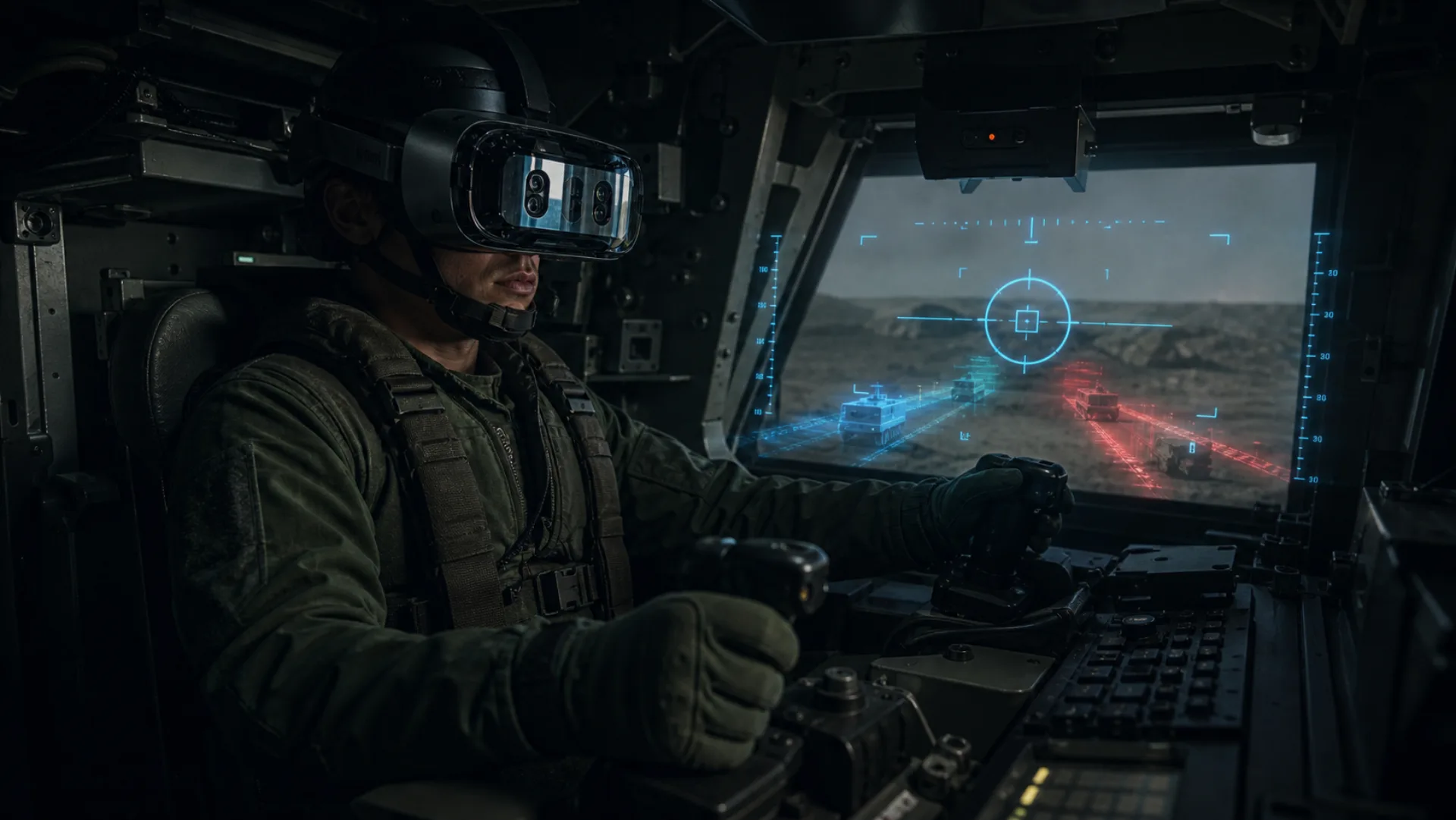
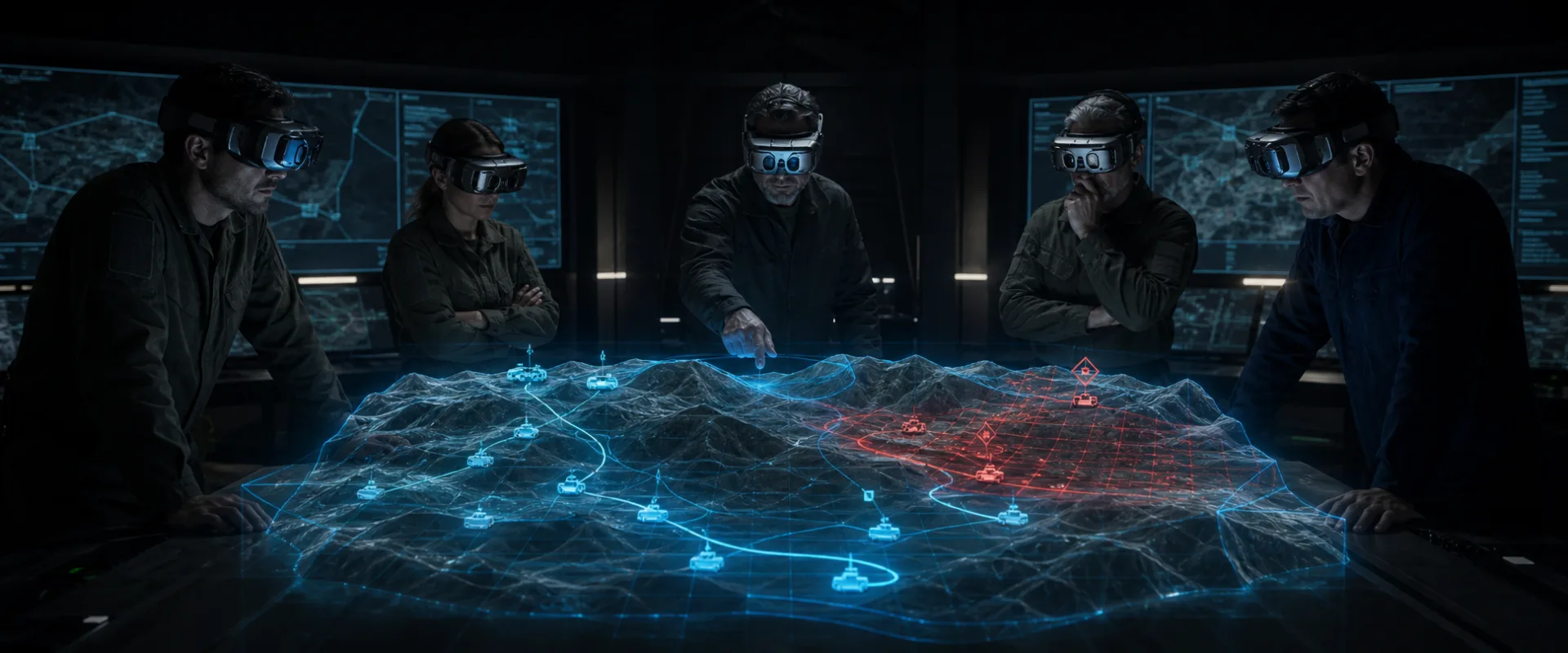
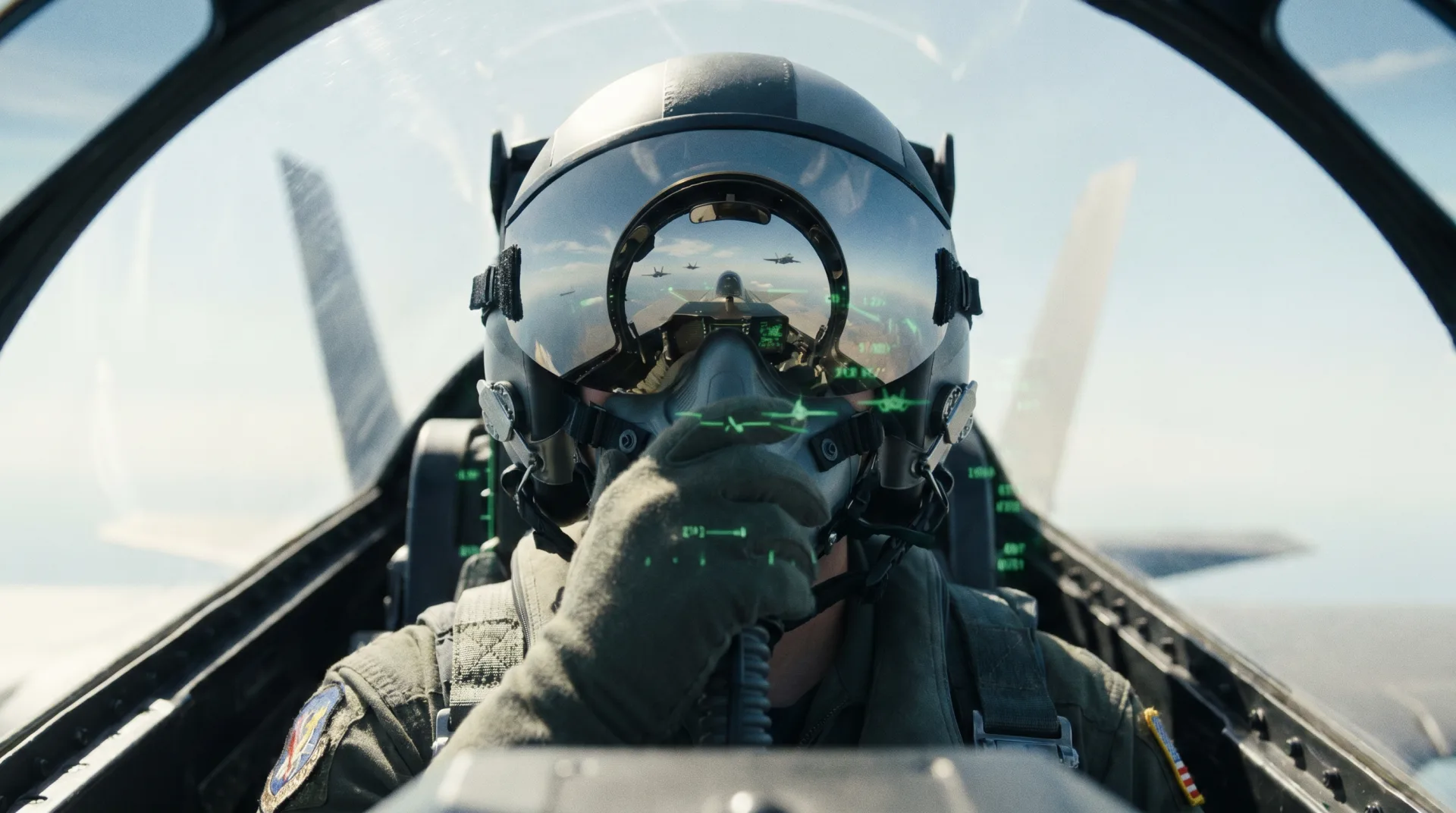
Combat simulation and mission rehearsal replaces live-fire exercises with networked VR training, deployed at NDA, IMA, regimental centres, and unit-level facilities. Soldier-borne tactical AR keeps blue-force data, threat markers, and navigation heads-up and hands-free, compatible with PVS-14 and PNV-10T night vision. AR-guided MRO puts work instructions and depot-level expert guidance into a technician's field of view for platforms manufactured by HAL, DRDO, BEL, and OFB. The training-day detail, the attention/hands constraint behind the AR, and the platform-that-can't-come-off-the-line logic behind MRO are covered in full on the training and field-support page — this page covers the vendor side: compliance, loadout configuration, and engagement.
Hardware for every mission
Defence-ready hardware.
These are the reference platforms behind the loadouts above — not a second product catalogue, but the actual hardware each configuration is built on. QXR-06-10 is the standalone 6DoF core for combat-simulation and command-visualisation loadouts; QAI-06 is the under-49g soldier-borne AR core for the tactical HUD loadout; QXR-06-07 is the Micro-OLED passthrough core for MRO and digital-twin work. Each ships as a reference design QWR's ODM process configures to the specific loadout, not as a fixed consumer SKU.
QXR-06-10 →
Combat simulation and tactical decision training with 6DoF controllers and full-colour passthrough for terrain-aware rehearsal.
QAI-06 →
HUMBL-based platform with BMS integration and NVG compatibility under 49g.
QXR-06-07 →
Micro-OLED passthrough for digital twin visualisation and command wargaming.
Classified or unclassified.
Whether you are Army Design Bureau, DRDO, BEL, a defence PSU, or a private sector integrator, we ensure NDA-first engagement.