

.svg)
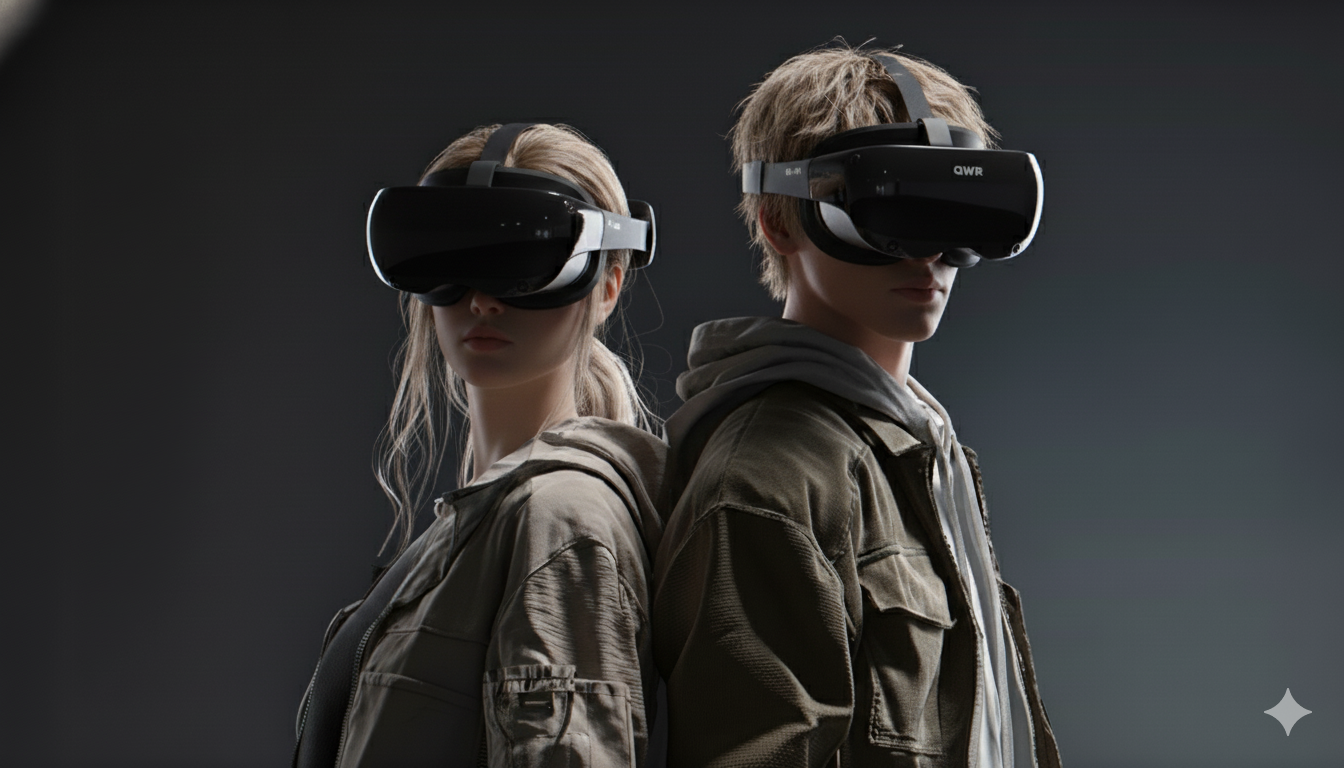
VR in education and training turns passive learners into active explorers. It makes abstract concepts tangible and creates a lifelong love for learning.
Indian education has shown remarkable resilience despite pandemic-related school closures. Student enrollment rates jumped from 97.2% in 2018 to 98.4% in 2022. This rise creates a perfect chance to implement VR in schools of all sizes across the country. VR brings a unique experience that connects theory with practice by putting learning into real-life scenarios.
The path isn't without its bumps. The high upfront cost of VR hardware and infrastructure makes many schools hesitate. Teachers need both technical skills and teaching knowledge to create VR learning experiences that line up with the curriculum.
The results tell a compelling story. Bhartiyam Public School saw amazing changes in just a few months. Students who once struggled with complex scientific concepts now participate eagerly in virtual experiments. On top of that, VR helps solve vital educational challenges. It supports students with special needs and makes remote learning possible.
This piece will show how your institution can welcome VR in education while handling common setup challenges. Let's see how this technology can revolutionize your teaching and learning environment!
VR in Indian education and training has grown faster over the last several years. Only 7% of high schools had VR technology in 2021, but the numbers jumped to 38% by 2024. Government programs like 'Digital India' and the National Education Policy 2020 have made VR technology available to students in smaller cities and towns.
Indian schools face distinct challenges that VR helps solve. Classrooms often get overcrowded with an average of 25 students per teacher. VR provides extra support and customized attention when teachers cannot give individual time to each student.
Students can now access educational VR content in 12 Indian languages. Plans are underway to include all 22 official languages by 2026. This language support is vital in a country where students don't deal very well with the medium of instruction.
A detailed survey of 25,000 Indian students showed the most important benefits of VR in Indian education. Local content designed specifically for Indian students has made this implementation a soaring win. Modern VR lessons teach mathematics through Indian architecture, science through familiar settings, and history through India's rich heritage. These lessons line up perfectly with NCERT textbooks, unlike foreign programs that previously failed to keep students interested.
VR's benefits in education go way beyond the reach and influence of just being new technology. Students show higher participation rates in communication skills practice, with 91% of educators noting increased engagement. Learning through immersion helps students remember information longer, and retention rates stay up to 80% even after a year.
This multi-sensory learning experience adapts to visual, auditory, and kinesthetic styles, which makes education accessible to more students. Students using VR feel 3.75 times more emotionally connected to content than those in regular classrooms, which encourages a deeper grasp of complex ideas.
Medical simulations and engineering prototyping in VR are a great way to get ground application skills. Workers in dangerous industries can practice complex procedures without risks.
Schools with tight budgets find economical solutions in VR technology. Those unable to afford expensive science labs can use virtual alternatives that cost nowhere near as much.
Yes, it is true that VR helps close educational gaps between urban and rural areas by giving remote students access to quality content they couldn't get otherwise.
VR's most powerful impact comes from creating tailored learning paths for students with disabilities.
Students with visual impairments can explore spatial environments through haptic VR, and those with hearing impairments learn better through visual instructions.
Schools and colleges need a well-planned strategy to bring VR into classrooms. A full picture of curriculum needs, budget constraints, and infrastructure requirements helps identify the subjects that would benefit from VR. This assessment reveals the resources needed.
Schools should make VR technology accessible to more people, particularly in rural and underserved areas. Educational authorities can achieve this through mutually beneficial alliances, grants, and subsidies. Many schools that lack proper science labs now use virtual alternatives that cost much less.
Success depends heavily on teacher preparation. Schools must run training programs that cover both technical skills and teaching methods. Studies show a significant gap - only 23% of rural teachers feel ready to use VR in their classrooms, while 65% of urban teachers feel confident.
The content must line up with curriculum goals and what students need to learn. VR educational programs now run in 12 Indian languages. Plans are underway to include all 22 official languages by 2026.
Clear safety rules protect students. These rules cover device cleaning, age-suitable content, and health issues from long VR sessions. The best approach starts small - pilot programs help test and improve based on ground experiences before expanding VR across the school.
VR has changed how India approaches education by creating powerful learning experiences that weren't possible before. High schools have seen a jump from 7% to 38% in VR adoption, which shows how this technology tackles specific challenges in our educational system. VR solves the problem of overcrowded classrooms and gives students a tailored learning experience that works for different learning styles.
The creation of local content in multiple Indian languages makes VR even more valuable for our students. Kids now learn through familiar examples - they study math using Indian architecture and take a closer look at science in environments they know well.
Students don't just get more involved - they remember what they learn longer, feel more connected to the material, and learn practical skills safely. This technology also helps close the gap between urban and rural areas, giving students in remote locations access to quality education whatever their location.
Your school's success with VR depends on good planning. You'll need to get a full picture of your needs, train your teachers well, and pick content that matches your curriculum. Even the best technology needs teachers who know how to combine it smoothly with their teaching methods.
The upfront costs might look steep, but the long-term benefits to education make VR worth thinking about for schools that look ahead. VR opens new possibilities in education - from helping visually impaired students grasp spatial concepts to providing safe training in dangerous environments.
Indian schools now have a chance to fix old problems while getting students ready for an increasingly digital world. We should focus on how fast we can make VR work for all students across our diverse country, not whether it belongs in our classrooms.
AV Today Magazine – VR Classrooms & Indian Education Adoption
SSRN – VR-Based Learning & Pedagogical Impact
IJSET Journal – VR in Indian Education Research Paper
Preprints.org – Systematic Review of VR for Learning Outcomes
ACESNWS – Integrating VR into Curriculum: Opportunities & Challenges
Prospect Legal India – VR in Indian Schools: Legal & Policy Perspective

By signing up, you are agreeing to Terms of service and Privacy policy.
You can withdraw consent at any time.
.svg)
.svg)
.svg)

.png)
