

.svg)
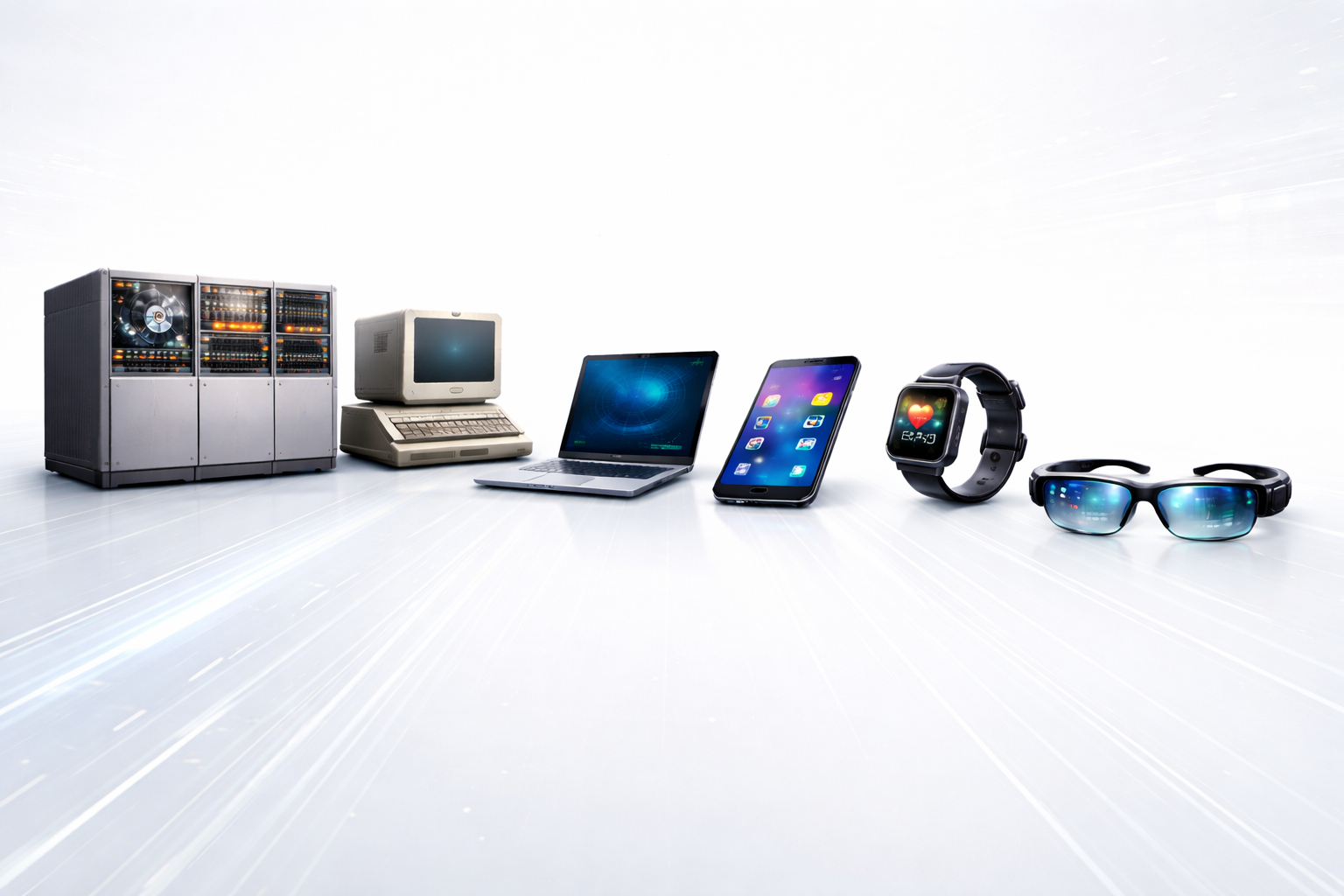
Computing technology's generational story stands as one of history's most dramatic technological transformations. Personal computing has made remarkable progress in the last few decades, moving from room-sized mainframes to devices we wear on our wrists. The digital world has altered substantially as users moved away from bulky desktop computers toward more portable and adaptable devices like laptops, tablets, and mobile phones.
Wearable computers represent a key milestone in personal technology's progress by making computing power more accessible and portable. The wearable computing concept dates back more than fifty years, though recent advances have sped up its development. This transformation will likely continue as wearable technologies like smart glasses prepare to take the place of traditional mobile devices in the post-smartphone era. Each generation of computing devices has brought technology closer to seamless integration with our lives. Modern wearable computing devices help people with disabilities, boost job performance, increase safety, monitor health and provide immediate data to users. This piece explores the compelling timeline of computing devices, starting from their earliest forms to the state-of-the-art wearable tech emerging worldwide, including in India.
Modern computing started when massive mainframe computers ruled the digital world from the 1940s through the 1970s. These computing giants emerged during World War II for military calculations and marked the first wave in the development of generational computing.
Mainframes were more than just big computers—they took up entire rooms or even floors of buildings. IBM's first commercial mainframe, the UNIVAC I, arrived in 1951. It weighed nearly 13 tons and needed a special cooling system in a controlled environment. These tech giants showed what centralized computing power meant—everyone connected to one powerful machine.
The way mainframes were built showed their purpose clearly. A select few controlled these centralized processing powerhouses. People used "dumb terminals" that couldn't process anything on their own to interact with the system. All computing happened in one place, which created a hub-and-spoke model that shaped early computing setup.
Only the largest organizations could afford to own and run these computing marvels:
- They cost hundreds of thousands or millions of dollars
- They needed special tech staff to run and maintain
- Special climate-controlled facilities added big ongoing costs
- Programming experts were rare and expensive
These high costs kept computing out of reach for most businesses. The technology remained unavailable if you had a small business. Most people only saw computer results through printed bills, airline bookings, or government papers.
Government agencies and research groups benefited most from mainframe technology. Military needs drove the original development, and scientists quickly started using these powerful calculators. Tax offices, census departments, and other administrative units used mainframes to handle so much data.
Universities became important hubs for computing research because they could afford mainframe systems. Many breakthrough discoveries in computer science happened at these schools. Students and researchers had rare access to computing resources there.Businesses started using mainframes too, especially banks, insurance companies, and airline booking systems that needed to process lots of data. These early business uses helped establish computing as a vital business tool rather than just a scientific experiment.
The 1970s microprocessor revolution sparked a computing renaissance that brought technology from specialized institutions to our homes. Nobody thought people would own personal computers at first. The rapid advancement of integrated circuit technology turned this dream into reality.
A turning point came in 1975 when MITS launched the Altair 8800 computer kit for just INR 33,499.04, which cost just a bit more than its Intel 8080 microprocessor. This blue box measured 43 × 46 × 18 cm and got electronics enthusiasts excited despite having no keyboard, display, or software. Users had to program it by flipping switches on the front panel, and flashing lights showed the results.
Better computers soon became available. The Apple II, Tandy Radio Shack TRS-80, and Commodore PET launched in 1977, laying the groundwork for personal computing. The TRS-80 led the market with a price of INR 33,667.80 for a fully assembled unit. These eight-bit microprocessor machines made computing affordable to small businesses and individuals.IBM PC's arrival in 1981 created new standards, especially in business settings. It found its way beyond homes into offices, schools, and government institutions. This created a rich ecosystem of compatible hardware and software.
Desktop machines evolved alongside portable computing. Most historians call the Osborne 1, released in April 1981, the first true mobile computer. It weighed 24.5 pounds and came with a small 5-inch screen and two floppy drives.
Laptops became lighter and more powerful through the 1980s. The Grid Compass (1982) introduced the clamshell design we know today, where the flat display folds against the keyboard. Portable computers like the NEC UltraLite weighed under 5 pounds by 1989.
Software development flourished as hardware improved. Microsoft's first product—a 4 kilobyte paper tape BASIC interpreter—let users create programs in higher-level languages instead of complex machine code.
VisiCalc, the first electronic spreadsheet, boosted Apple II's popularity by a lot. Operating systems like MS-DOS powered millions of machines and helped Microsoft dominate the software market.
Software ecosystems became vital commercial environments by the late 1990s and early 2000s. Google Android, Apache, and iOS showed how software development grew beyond traditional company boundaries to include networks of interdependent actors.
Apple's iPhone launch in 2007 began a new chapter in generational computing. This groundbreaking moment turned mobile phones into pocket-sized computers and created what became known as the post-PC era.Hardware designed for Western consumer markets often struggles under these conditions. As a result, Indian enterprises increasingly look for purpose-built training hardware rather than adapted consumer assumptions.
The world saw an explosion in smartphone use, reaching nearly 6.4 billion subscriptions by 2022. Experts predict this number will grow to 7.7 billion by 2028. High-speed data transmission became possible with 3G networks that could handle video content. Phones turned into gateways to information and entertainment. This new connectivity changed our relationship with technology. Computing wasn't just a destination anymore - it existed all around us.
Large touch displays brought a revolution in device operation. The iPhone made capacitive touchscreens popular, which could detect touch through the human body's electrical properties. Users could now make multi-touch gestures like pinch-to-zoom naturally. App stores created thriving ecosystems with countless applications. The Google and Apple marketplaces offered approximately 2.5 million apps by 2023.
This uninterrupted connectivity brought its own challenges. People could now handle work duties anywhere, which blurred the lines between professional and personal life. Research showed strong negative links between smartphone intrusion and work-life balance. The solution came from an unexpected place - companies found that letting employees use smartphones for personal tasks at work actually helped reduce stress and work-life conflicts.
Wearable devices represent the next frontier in generational computing as we move beyond smartphones. The last decade shows remarkable progress in technology that lives on our bodies rather than in our pockets.
Fitness tracking has evolved since Leonardo da Vinci's proposed pedometer in the 16th century. Modern wearables surpass simple step counting and work as sophisticated health monitors. Smartwatches or fitness trackers are now used by one in five people. These devices can monitor heart rate, sleep patterns, blood oxygen levels, and even detect atrial fibrillation.
Smart glasses mark another most important advancement in wearable technology. Users can access digital information hands-free through these devices as it overlays onto ground views. Teams on the frontline use augmented reality glasses to get remote support without work interruption, which saves minutes on every task. The XR market will reach INR 90033.94 billion by 2030, according to analysts.
Wearable technology revolutionizes daily routines through continuous monitoring capabilities. These devices detect, analyze, and transmit vital signs and ambient data that enable immediate biofeedback. Wearables are vital for communication, navigation, and personal safety beyond health tracking. Smartwatches include fall detection and emergency SOS features that can save lives, especially for elderly users.
Wearables face several key hurdles:
- Battery limitations: Users find devices less appealing when they need charging every 8-12 hours
- Privacy concerns: The Dark Web values sensitive biometric data from wearables at up to INR 21095.11 per record
- Form factor constraints: The challenge remains to create devices small enough for comfort while maintaining functionality
India's smart wearable market value reached USD 2.94 billion in 2025 and will grow to USD 10.26 billion by 2031, with a 23.17% annual growth rate. The global wearable technology market will expand from USD 84.2 billion in 2024 to USD 186.14 billion by 2030. Smartwatches lead with 62.78% of India's market share, while smart rings show strong growth at 24.4% CAGR.
Computing technology's development shows how much ground we've covered in our brief human history. Those first-generation mainframes that once filled entire rooms have now transformed into powerful devices we wear on our wrists. Each technological breakthrough has brought computing closer to smooth integration with our daily lives.
The progression reveals clear patterns. Mainframes kept computing power within select institutions. Personal computers made technology available to businesses and individuals. Smartphones changed everything about how we interact with technology by making computing power always available. Wearable devices are now the next logical step in this development.Smart glasses show great promise as potential smartphone replacements. These glasses are different from earlier wearable devices. They offer augmented reality capabilities that overlay digital information onto our physical world. This technology could transform various industries from healthcare to manufacturing and education.
Indian consumers have welcomed this technological change with open arms. The market is expected to reach USD 10.26 billion by 2031, which shows how well wearable technology strikes a chord with Indian users. Smartwatches lead the market right now, but new technologies like smart rings show great promise.
Battery life issues, privacy worries, and design limitations create obstacles to widespread adoption. All the same, these challenges will become less significant as technology advances. The advantages of constant health monitoring, better communication, and increased efficiency make up for these temporary setbacks.
The post-smartphone era has arrived, and one thing stands out: computing technology keeps getting smaller, more personal, and more integrated into our lives. The story of computing through generations reveals more than just technical progress. It shows how we adapt to and gain from these state-of-the-art developments. We're just at the start of the wearable revolution, and its full potential remains unexplored.
Personal Computer Revolution
https://www.britannica.com/technology/computer/The-personal-computer-revolution
History of Personal Computers
https://en.wikipedia.org/wiki/History_of_personal_computers
Mainframes to AI Era
https://www.pragmaticcoders.com/blog/software-development-history-mainframes-pcs-ai-more
Laptop Computing Evolution
https://en.wikipedia.org/wiki/History_of_laptops
Portable Computer Timeline
https://www.computerhope.com/history/laptop.htm
Smartphones Rise
https://www.sciencemuseum.org.uk/objects-and-stories/computer-your-pocket-rise-smartphones
Post-PC Era Shift
https://www.forbes.com/sites/maribellopez/2012/05/01/four-ways-the-post-pc-era-differs-from-today/
Touchscreen Evolution
https://modernsciences.org/the-evolution-of-smartphone-touchscreens/
Wearable Technology Overview
https://en.wikipedia.org/wiki/Wearable_technology
Fitness Tracking Evolution
https://medicalfuturist.com/the-evolution-of-fitness-tracking
Smart Glasses for Business
https://www.uctoday.com/immersive-workplace-xr-tech/the-best-smart-glasses-for-business-ar-ai-and-beyond/
Wearable Market Growth
https://www.grandviewresearch.com/industry-analysis/wearable-technology-market

By signing up, you are agreeing to Terms of service and Privacy policy.
You can withdraw consent at any time.
.svg)
.svg)
.svg)

.png)
