

.svg)
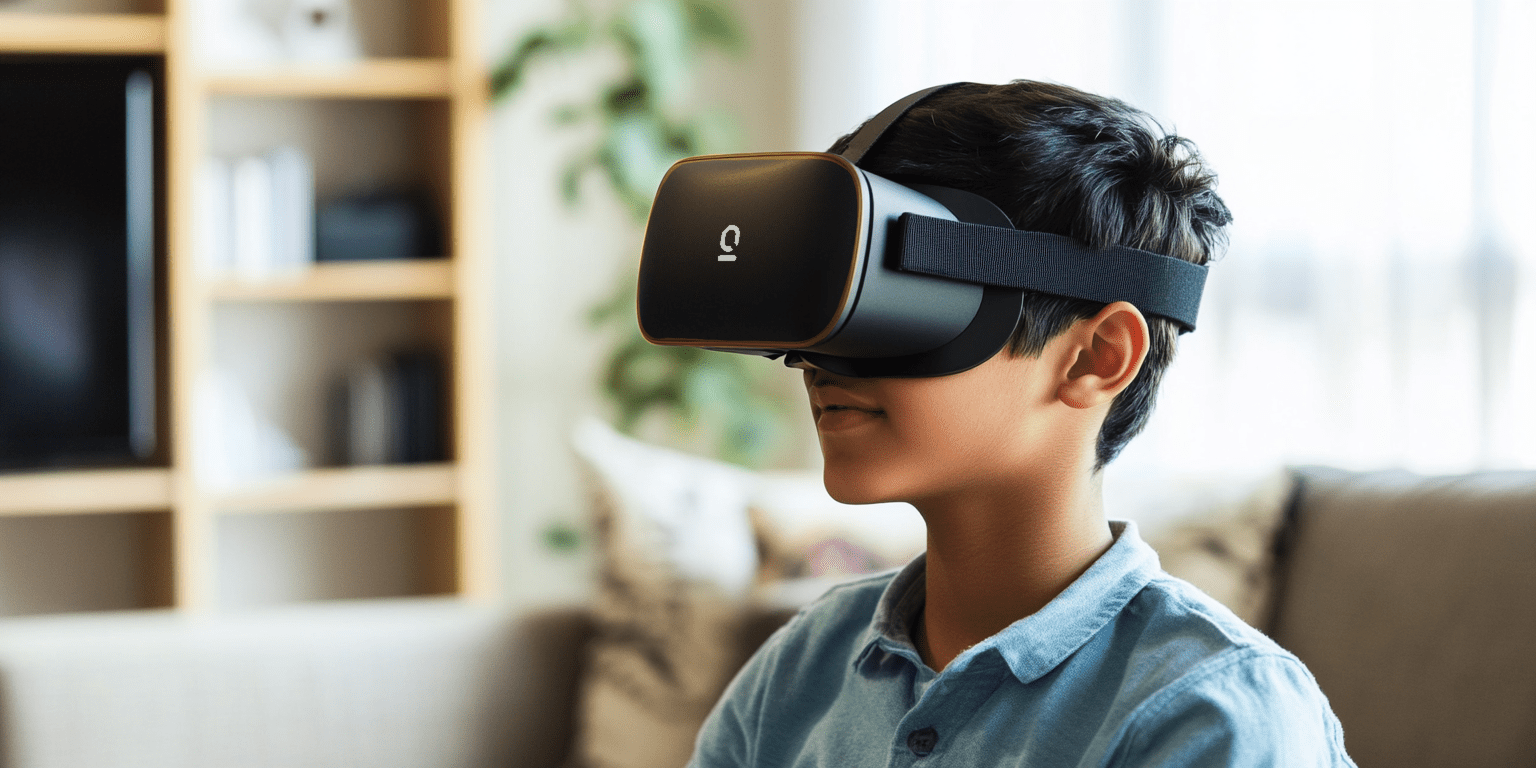
XR in education is changing how 89 million K-12 students learn in India, and it could reach 265 million learners across the country. Teachers now see a significant change in the way students interact with educational content through extended reality technologies. Market projections show the global XR industry will reach $1,246.57 billion by 2035, with a strong growth rate of 24.2%.
Immersive learning has become India's next educational frontier because it works. Research shows that 93.1% of teachers found XR platforms "very to extremely useful" for teaching, and every educator predicted their students would respond well.
These XR technologies create interactive experiences that improve student participation and help them understand complex subjects better. VR in education and training offers a technology-driven method that uses immersive visuals and 3D experiences to improve learning retention. This explains why edtech XR solutions have spread quickly, now reaching over 40,000 classrooms in more than 60 countries worldwide.
Extended Reality (XR) changes how Indian classrooms work by creating learning experiences that seemed impossible before. XR works as an umbrella term that covers technologies which alter reality. These technologies add digital elements to physical environments or create entirely virtual worlds.
Extended Reality covers three primary technologies that exist along what experts call the "virtuality continuum." Virtual Reality (VR) creates fully-immersive digital environments that block out physical reality completely. Students enter computer-generated worlds through specialized headsets that take them to different places and times.
Augmented Reality (AR) adds to real-world environments by showing digital information or virtual objects in real-time. AR enhances reality rather than replacing it. You might see apps that show 3D models on your desk or floor.
Mixed Reality (MR) lets digital elements naturally interact with physical objects. MR creates environments where virtual and real items exist together and respond to each other. These technologies make up the XR spectrum that now appears more often in Indian classrooms.
India's educational gaps make immersive learning vital. Students from remote areas with limited resources can take virtual trips to museums, explore landmarks, and participate in hands-on learning activities they couldn't access otherwise. A country with vast regional differences needs this kind of educational access.
Research shows students retain approximately 90% of what they experience, compared to just 30% of what they hear and 20% of what they see. This improvement in retention makes XR a powerful tool for India's education system, which doesn't deal very well with engagement and practical application.
XR technologies support different learning styles. 3D visualizations help visual learners, while kinesthetic learners can interact with virtual objects physically. India's diverse student population benefits from this flexibility.
VR applications work across many disciplines and scenarios.
To cite an instance:
- Science exploration: Students can conduct complex experiments safely in virtual labs, explore anatomy in 3D, or travel through the solar system.
- Historical immersion: Learners can walk through ancient civilizations and witness historical events firsthand instead of just reading about them.
- Skills development: Students can practice critical skills from public speaking to complex surgical procedures without risk.
This approach shows remarkable results—students who use immersive VR completed tasks more than twice as fast as those using traditional computer programs. VR offers an available alternative for education in India, where infrastructure or resource limitations can restrict hands-on learning opportunities. Students understand better through this experience-based learning approach.
India has begun a mission to bring XR into classrooms all over the country. The National Education Policy (NEP) 2020 provides the foundation for these efforts. It puts emphasis on hands-on, inclusive, and skill-based learning that works well with immersive technologies.
A partnership between India's National Council of Educational Research and Training (NCERT) and EON Reality marks the most important development. They want to provide immersive learning to 89 million K-12 students, with plans to reach 265 million learners.
The July 2025 pilot program showed great results:
- 93.1% of teachers found the platform "very to extremely useful" for teaching
- 89.6% of participants wanted it rolled out nationwide
- Everyone predicted students would engage positively
- Teachers created 1,187 educational experiences during the pilot
State governments have launched their own programs too. Tamil Nadu is putting final touches on a detailed AVGC-XR policy that focuses on adding XR to curricula and developing talent. Karnataka, Maharashtra, and Telangana have also taken steps to support this sector's growth.
The gap between rural and urban education remains a challenge despite tech advances. IIT Madras researchers are working on AR/VR-enabled learning specifically for rural schools. They want to bridge the "Digital Divide" with portable platforms that work beyond physical classroom limits.
UNESCO's earlier pilot with quasi-XR simulations in rural Africa showed that computer visuals helped students learn better and remember more. Another study revealed students understood spatial concepts better through XR systems.
Several platforms lead the way in bringing XR to Indian classrooms. XR4STEM offers a detailed system that lines up with NEP 2020. They provide certified teacher training and content mapped to the curriculum.
FotonVR stands out because it addresses India's language diversity. They offer content in many regional languages that matches Indian curricula. Their mixed model combines classroom VR with home-based AR learning that students can access on smartphones.
These platforms focus mainly on mobile-first availability. This ensures they can reach both urban and rural areas with methods that work on different devices.
Modern immersive classrooms revolutionize educational outcomes in multiple ways. Students learn differently, and teachers can teach more effectively. These classrooms boost student engagement across cognitive, behavioral, and affective dimensions.
Students who learn through AR-integrated instruction show a 30% increase in retention levels and better engagement. VR helps students grasp abstract concepts through immersive situations. This technology gets more and thus encourages more participation through interactive learning. Students connect emotionally through affective experiences.
Students can practice safely in virtual simulations - from physics experiments to historical site visits. Immersive technologies offer platforms where learners can explore deeply into scientific theories with unprecedented interaction.
AI-powered adaptive systems create learning experiences that adjust to each student's progress. These systems quickly spot strengths and weaknesses. Learning objectives adapt to help students master basics before moving to complex concepts.
Students can access immersive content in multiple Indian languages, which respects linguistic diversity. Learning in one's native language creates stronger connections that promote better engagement and motivation.
Teachers can create professional-grade immersive experiences in just 16 minutes on average. No-code, AI-powered platforms make content production faster. XR Design Studio lets teachers build immersive worlds without coding knowledge, which reduces time and effort.
XR leads educational transformation in India. The numbers tell an amazing story - 93.1% of educators find XR platforms very useful, and every teacher predicts better student engagement. These results prove what many innovative teachers already know - immersive learning gets results.
XR technologies help students remember 90% of what they learn, compared to just 30% of what they hear. This huge jump in retention shows why these tools belong in Indian classrooms. The NCERT-EON Reality partnership shows a clear push to bring these benefits to millions of K-12 students across the country.
Some hurdles still exist. Device prices from ₹50,000 to ₹250,000 per unit make it hard for rural schools to afford them. Teachers need more training, and the curriculum needs updates quickly. Government bodies, schools, and tech companies must work together to roll out these changes successfully.
Indian education's next chapter depends on smart tech adoption. XR isn't just about cool new gadgets - it tackles old problems like student engagement, information retention, and access to quality education. These immersive classrooms help bring better education to students in every corner of India.
Students deserve learning experiences that get them ready for tomorrow - experiences that stick with them and mean something. XR technology helps make this happen, one classroom at a time.
Interaction Design Foundation – Beyond AR vs VR: What Is the Difference Between AR, MR, VR and XR?
Arm Newsroom – XR, AR, VR, MR: Differences Explained
Verizon Business – The Benefits of Extended Reality in Education
Qualcomm – The Next Frontier in Education: How Generative AI and XR Evolve Learning
Express Computer – Embracing Immersive Learning Experiences: How Extended Reality Is Revolutionizing Education in India
Times of India – Tamil Nadu to Roll Out AVGC Policy to Revamp Curriculum and Build Talent
Drishti IAS – Potential of India’s AVGC-XR Sector
PIB Press Release – India’s AVGC Promotion Task Force Recommendations
AV Today – Virtual Classrooms: How VR Is Transforming Education in IndiaSpringer – Educational Technology & Society: XR Integration in Learning Environments

By signing up, you are agreeing to Terms of service and Privacy policy.
You can withdraw consent at any time.
.svg)
.svg)
.svg)

.png)
