

.svg)
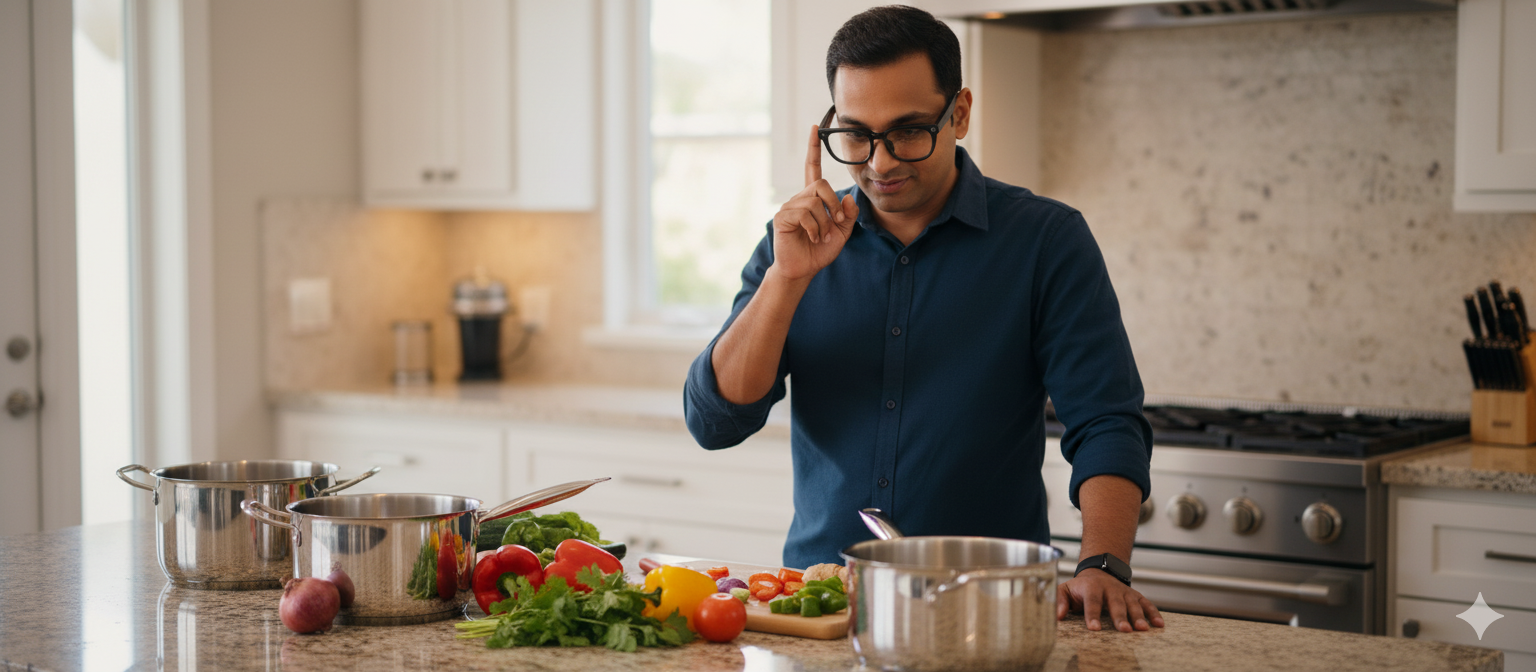
We’ve all been there: your hands are covered in flour, the garlic is sizzling dangerously fast in the pan, and you suddenly realize you’ve forgotten the exact ratio of vegetable stock to arborio rice. You reach for your smartphone, but the screen is locked, and your fingers are a greasy mess.
In 2026, this "kitchen friction" is becoming a relic of the past.
The rise of smart kitchen gadgets has shifted from bulky smart fridges to something far more intimate and practical: your eyewear. AI-powered smart glasses are officially the new must-have tool for the modern home chef, turning culinary chaos into a seamless, high-tech symphony.
The primary barrier to a perfect meal is often the interface we use to follow it. Smartphones and tablets aren’t built for the "splash zone." By using a voice-controlled recipe reader through your smart glasses, you eliminate the need to physically touch a device.
With modern AI smart glasses, you simply ask your built-in assistant, "What’s the next step?" or "How much cumin do I need?" The information is delivered instantly through open-ear audio, allowing you to keep your eyes on the knife and your hands on the ingredients. Unlike traditional tablets that require a dedicated counter space, your recipe follows your gaze—moving with you from the fridge to the prep station to the stove.
One of the most transformative updates in 2026 is the integration of Computer Vision (CV). Smart glasses no longer just "tell" you a recipe; they "see" what you’re working with. By scanning the ingredients on your counter, your glasses can identify mystery produce or suggest a meal based on what’s about to expire in your pantry.
Furthermore, multimodal AI now allows for real-time nutritional tracking. As you plate your meal, your glasses can estimate portion sizes and caloric density, automatically logging the data into your health app. This turns a simple pair of glasses into a powerful tool for precision nutrition, helping users maintain dietary goals without the tedious manual logging of the past.
Timing is the soul of great cooking. But managing a roast in the oven, pasta on the boil, and a reduction on the simmer usually results in a frantic scramble of kitchen timers.
Recent innovations in ambient computing allow users to set and monitor multiple hands-free kitchen timers simultaneously via a Heads-Up Display (HUD).
Imagine a small, non-intrusive notification in your peripheral vision telling you exactly how many seconds are left on your sear while you’re busy tossing a salad. This level of multimodal AI interaction ensures nothing ever gets overcooked because you were "too busy to check the clock."
In the age of social media, we don’t just cook; we share. Traditionally, filming a "how-to" video required a tripod, a cameraman, or a precarious phone setup that often missed the most important shots.
Camera-enabled smart glasses change the game by offering high-definition POV cooking video capabilities. Now, you can capture the perfect "egg crack" or the intricate garnishing of a dish exactly as you see it. This "first-person" perspective is not only more engaging for viewers but is 100% hands-free for the creator. It’s the ultimate tool for bridging the gap between lifestyle tech and culinary art.
Beyond the "cool factor," there is a serious case for hygiene. Kitchen surfaces are breeding grounds for bacteria, and our smartphones—which we take everywhere—are notoriously unsanitary.
By shifting your recipe interaction to wearable AI devices, you significantly reduce cross-contamination. Research indicates that digital cooking technologies that require less human handling can lower the risk of foodborne illness transmission. A hygienic cooking tech setup isn't just about convenience; it’s about a cleaner, safer home for your family.
TastyIgniter (2025): How Smart Eyewear Can Revolutionise the Future of Restaurant Service.
ResearchGate (2025): Augmented Reality Based Interactive Cooking Guide.
Trend Hunter (2025): AI-Powered Cooking Apps & Wearable Tech Platforms.
Question What's Real (QWR) (2026): HUMBL AI Smart Glasses: Product Specifications & Features.
IDC (2026): The Future of Smart Glasses: CES 2026 Innovation Report.
ZDNET (2026): CES 2026: The 7 Smart Glasses That Defined the Year.
MDPI (2024): Smart Kitchens of the Future: Technology's Role in Food Safety, Hygiene, and Culinary Innovation.
CNET (2026): I Made Dinner Wearing Smart Glasses: A 2026 Field Test.
PMC - NIH (2023): The Future of Software-Controlled Cooking and Digital Hygiene.
Insta360 (2025): POV Camera vs POV Glasses: The New Standard for Creators.

By signing up, you are agreeing to Terms of service and Privacy policy.
You can withdraw consent at any time.
.svg)
.svg)
.svg)

.png)
