

.svg)
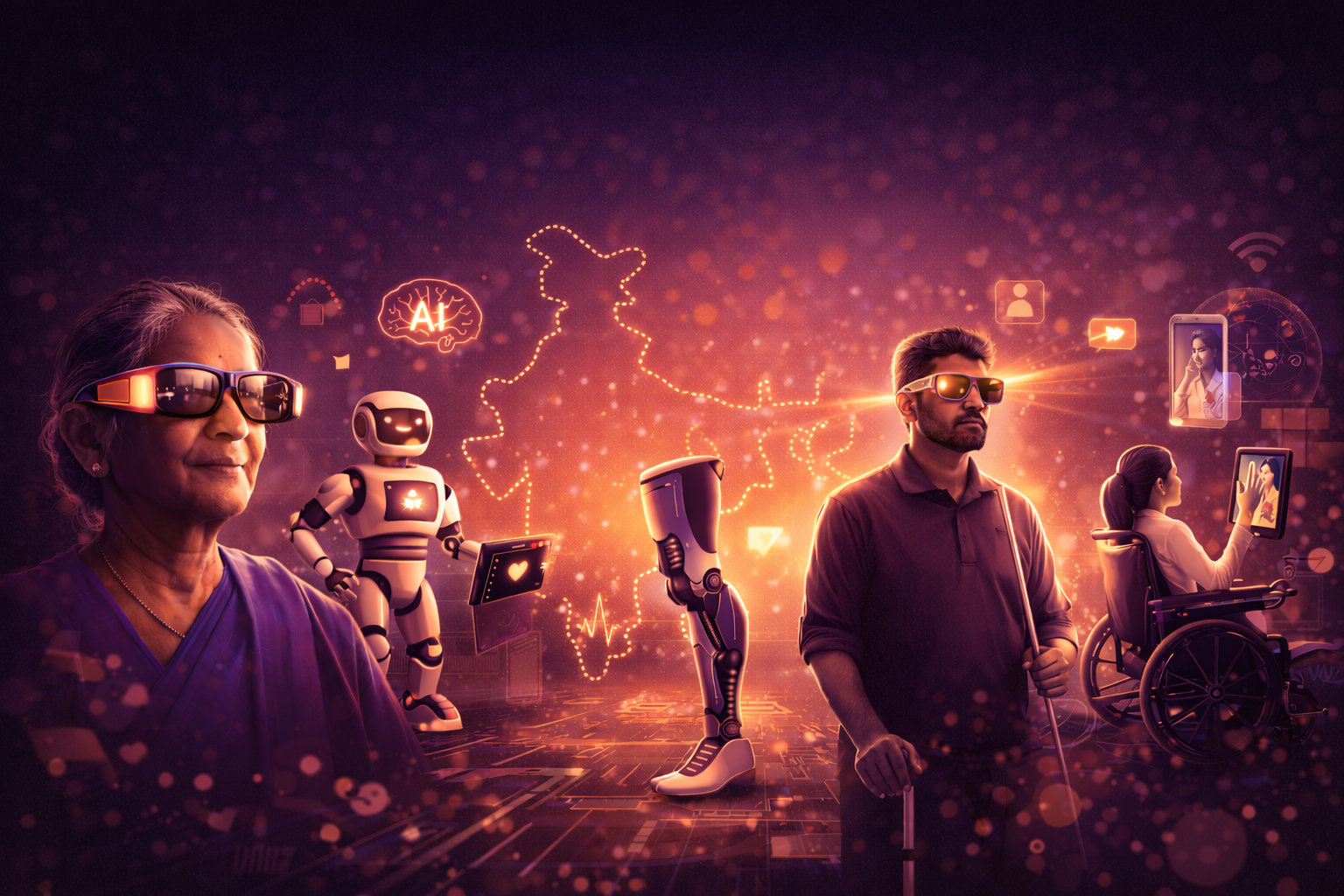
The rise of assistive technology in India promises to reshape the lives of millions. Right now, only one in ten people worldwide can get these vital tools. A pivotal shift in disability breakthroughs is happening as around 30 million Indians (2.2% of the population) live with disabilities. These numbers grow by a lot with age and reach 5.1% for people over 60.
The assistive technology industry shows incredible promise despite its challenges. The World Health Organization predicts more than 2 billion people will need at least one assistive product by 2030. Indian assistive devices range from simple mobility aids to cutting-edge AI-powered tools that boost independence. What a world of technology looks like seems bright, thanks to the Rights of Persons with Disabilities Act 2016. This act champions Universal Design—making products and services available to everyone without special modifications.
The path forward faces real hurdles like high costs, lack of awareness, limited training, and supply issues. This piece explores the key trends in assistive technology that create new possibilities for millions of Indians.
The digital world of healthcare and accessibility in India shows how assistive technology bridges the gap between disability and independence. Let's look at these tools, their users, and why the next few years will shape India's assistive tech ecosystem.
Assistive technology (AT) covers both assistive products and their related service delivery systems that help people with functional limitations live independently. These tools differ from therapeutic products that treat illnesses. AT helps people overcome functional difficulties without treating the actual condition. To name just one example, optical magnifiers help improve visual acuity instead of treating the disease that causes poor vision.
These technologies range from simple mobility aids to advanced computerized systems. AT has any item, equipment, software program, or product system that boosts, maintains, or improves the functional abilities of persons with disabilities. The right services must support these technologies through prescription by certified professionals and training for effective use.
AT benefits people of all backgrounds. The main users are:
- Persons with disabilities (PwDs) – the largest group needing assistive products
- Older people with age-related functional challenges
- People with chronic health conditionsPeople recovering from strokes or injuries
- People who need temporary help after accidents or illnesses
A newer study, published in India found that the sample prevalence for AT need was 27.8%, with an estimated population prevalence of 24.5%.
On top of that, it promotes independence in education, employment, and daily activities. This changes how society views PwDs from dependent individuals to capable contributors.
The year 2025 marks a vital point in India's assistive technology development. Demographic changes and epidemiological transitions show the global need for AT will reach 3.5 billion by 2050. This growth puts 2025 at a significant midpoint where decisions about infrastructure and breakthroughs will influence accessibility for decades.
Over the last several years, India has run the Assistance to Disabled Persons for Purchasing/Fitting of Aids/Appliances (ADIP) scheme. The government recently modified and approved it to continue until March 31, 2026. This steadfast dedication lines up with growing domestic manufacturing capabilities under Make-in-India initiatives, creating a perfect mix of policy support and production capacity.
The implementation of the Digital Personal Data Protection Act now addresses privacy concerns in technology-driven accessibility solutions. The year 2025 represents a defining moment when regulations, technological capabilities, and market awareness meet to change assistive technology availability across India.
Assistive technology devices in India cover many categories. Each device helps address specific functional limitations.
Though the Indian market is still growing, these technologies play a vital role in boosting independence and quality of life for millions.
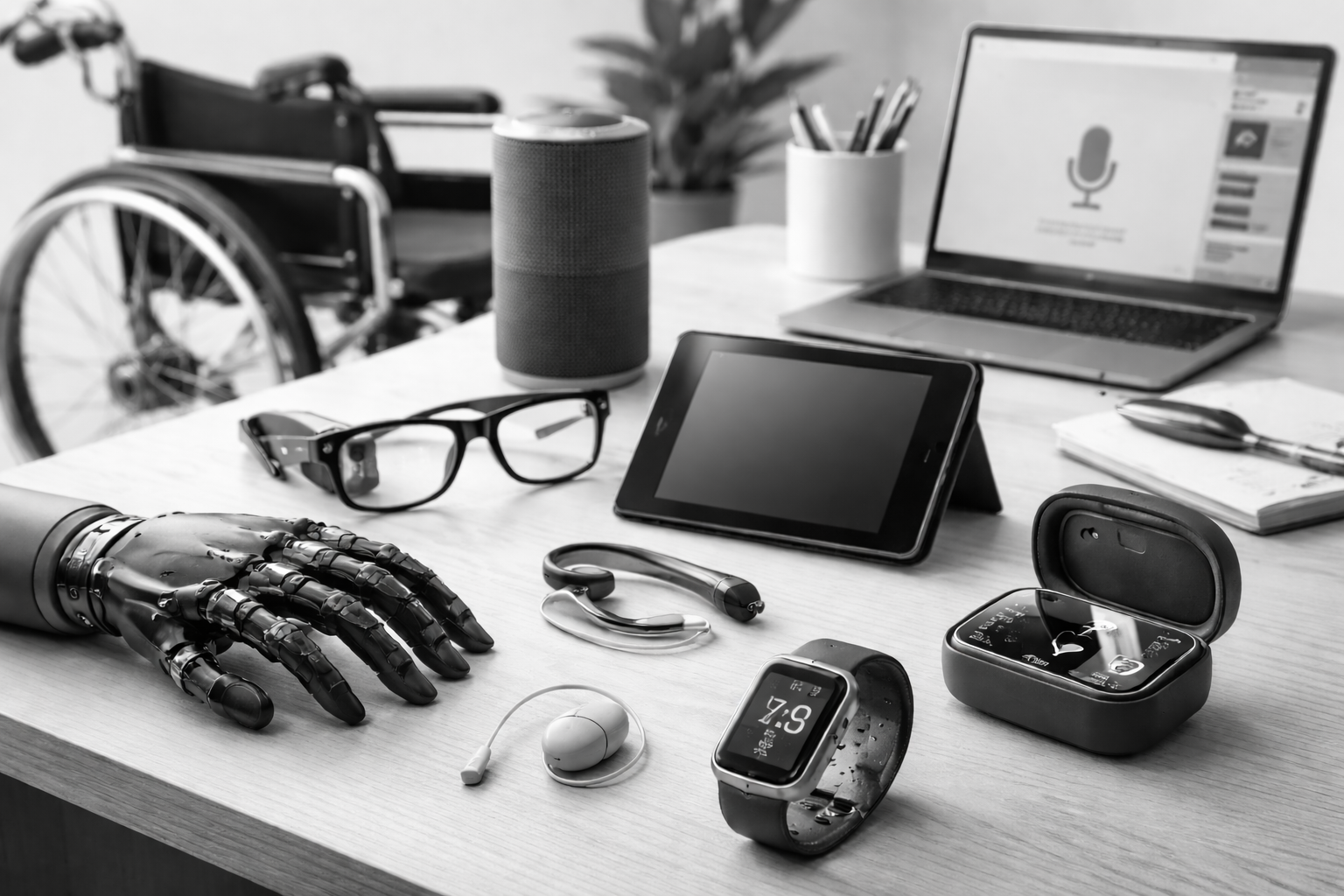
Mobility aids are the foundations of assistive technology in India. They help you move around if you face movement challenges. The Assistance to Disabled Persons (ADIP) scheme provides conventional hand-propelled tricycles like "Hamrahi" and "Stuti." You'll also find standard folding wheelchairs for adults ("Saathi") and children ("Mamta").
Beyond simple mobility, sports wheelchairs and active folding models offer targeted solutions. Mobility supports like crutches, walking sticks, and walkers distribute upper body weight based on your needs. Children with developmental delays need carefully prescribed mobility aids. They should use strollers until age seven, then switch to customized wheelchairs or rollators based on their physical capabilities.
Vision aids help people with visual impairments interact with their surroundings. Optical low vision aids range from correctly refracted glasses to magnifying spectacles. You'll also find stand magnifiers with built-in lights and hand-held magnifiers.
Electronic options feature video magnifiers that adjust contrast, text-to-speech devices, and OCR (optical character recognition) technology. Of course, smartphones with screen readers are now more available.
AI-powered smart glasses represent innovative technology that can read text aloud, identify objects, and describe scenes.
People with complete vision loss rely on Braille systems, canes, and DAISY players (Digital Accessible Information System) as their essential tools.
Hearing assistive technologies make sound perception better through different methods. Behind-the-ear (BTE) aids work well for children and adults with moderate to severe hearing loss. In-the-ear (ITE) models come with telecoil technology to improve phone communication.
Receiver-in-canal (RIC) and completely-in-canal (CIC) devices offer more subtle options. Group settings benefit from assistive listening systems like induction loops, FM systems, and infrared technologies.
These systems send amplified sound straight to the listener. Together, these technologies make speech clearer, cut down background noise, and connect wirelessly to other devices.
Cognitive support technologies help with memory, planning, and staying organized. Simple solutions include memory journals, sticky note reminders, and graphic organizers. High-tech options feature smartphone apps for scheduling, timing, and medication management.
Smart speakers help with orientation and reminders, which really helps people who experience confusion. People with learning disabilities can overcome reading and writing challenges using specialized fonts, speech-to-text features, and word prediction software.
Self-care technologies make independent living easier. These tools include modified utensils, adaptive switches, incontinence products, and grab bars. People with sensory limitations benefit from large-print and audible books, phones with large-sized numbers, and magnifying mirrors.
Customized orientation boards, timers, and daily activity checklists help structure routines if you have cognitive challenges. These everyday assistive products also let people enjoy leisure activities through adapted games and recreational equipment.
The digital world of assistive devices in India is taking a new direction as we look toward 2025. The focus lies on making these tools more available, budget-friendly, and suited to local needs.
India's rich language diversity drives the creation of AI-powered communication tools. BHASHINI, a government initiative, provides immediate speech translation between various Indian languages. This lets users hear content in their preferred language no matter what language the speaker uses.
Companies like Bolna Voice AI now support customers and handle recruitment in more than 10 local languages, including Hinglish, Hindi, Tamil, and Telugu.
Smart mobility solutions now cater to both city and village needs. The National Mission on Transformative Mobility aims to implement electric vehicles and battery storage systems.
Projects like Metrolite cost 50-75% less than regular Metrorail systems, making them perfect for smaller cities. IoT technologies tackle rural mobility challenges head-on and bring the concept of "smart land" alongside smart cities.
Local companies now make Smart Vision glasses that cost under Rs. 20,000, while similar international products cost about INR 400,000. These AI-powered wearables help people with visual impairments read text in many Indian languages, find their way around, and identify objects and people.
The devices have already helped nearly 800 visually impaired individuals.
Mental health tracking wearables monitor body signals like heart rate changes, sleep patterns, and skin response to spot early signs of stress, anxiety, or depression. Users get immediate feedback through breathing exercises or mindfulness prompts when stress levels rise. Research shows that deep learning models using data from these wearables can predict mental health issues early.
Schools now create learning environments with built-in assistive technology. The Amrita Institute's UNESCO Chair works to bridge the digital divide by providing equal access to educational resources. IRIS has developed dyslexia-friendly tools including special fonts, reading pens, and visual learning software that lets students adjust colors, reading speed, and sound output.
Telerehabilitation services reach more people, especially in areas with limited healthcare access. Apollo TeleHealth provides specialized services like TeleConsultations and Tele-ICU across India. Research indicates that 81.8% of people prefer telerehabilitation consultations, and 74.2% find it saves time and money. Quick online consultations, cost savings, and fewer hospital stays rank as the top benefits.
People with limited mobility can now use technology through voice and gesture controls. Camera systems detect hand movements while working with voice recognition to create new ways to control computers. Raspberry Pi-powered wheelchairs respond to voice and gesture commands, giving users with physical disabilities more independence. These systems focus on being available, easy to use, and empowering.
IIT Madras houses the National Center for Assistive Health Technologies, which boosts local research in assistive tools. The Department of Science and Technology backs the development of budget-friendly assistive devices like hand-held breathing testers and automatic sanitizing scrubs. Programs like AT2030 Attvaran help early-stage innovators create affordable assistive technologies.
Assistive technology in India stands at a crucial turning point. Breakthrough solutions promise more independence for millions, yet the biggest hurdles block these technologies from reaching everyone who needs them. These tools could help nearly 30 million Indians, but access problems are systemic in both rural and urban areas.
The next few years will without doubt bring remarkable growth to this sector. Make-in-India projects are creating cheaper alternatives to costly imported devices. AI-powered tools customized for India's languages and culture show real promise to break down old barriers.
Notwithstanding that, we don't deal very well with the gap between breakthroughs and real-world use. Even the best technologies won't reach those who need them most without tackling awareness, cost issues, and the lack of trained experts. Mutually beneficial alliances between public and private sectors offer the best way forward by combining government's reach with private sector's flexibility.
The mission goes beyond just creating assistive devices. We must build an environment where technology makes true participation and independence possible for all citizens, whatever their abilities. This fundamental change needs coordinated work from ministries, healthcare systems, and educational institutions.
The road ahead looks increasingly bright despite substantial challenges. So 2025 isn't just another milestone - it's a potential turning point where assistive technology starts achieving its life-changing promise for millions of Indians. This movement's heart isn't about devices and software - it's about human dignity, independence, and everyone's basic right to fully participate in society.
Assistive Technology Research
https://rjpn.org/ijcspub/papers/IJCSP24B1051.pdf
Government Aids Appliances
https://ayjnishd.nic.in/aids-appliances/
Inclusive Healthcare Tools
https://dst.gov.in/assistive-tools-technologies-and-techniques-make-healthcare-facilities-inclusive-and-accessible
India AT Landscape
https://drreddysfoundation.org/the-landscape-of-assistive-technology-in-india-for-persons-with-disabilities/
Assistive Technology Review
https://pmc.ncbi.nlm.nih.gov/articles/PMC10391423/
ICMR AT Product List
https://www.icmr.gov.in/icmrobject/static/icmr/dist/images/pdf/reports/ICMR_Assistive_Technology_Product_List_WEB.pdf
Bhashini Language Platform
https://bhashini.gov.in/
Mental Health Wearables
https://www.sensio-ai.in/post/can-wearables-really-help-with-mental-health-use-cases-data-limitations
Affordable Smart Glasses
https://timesofindia.indiatimes.com/city/ahmedabad/affordable-smart-glasses-for-the-blind-indias-advancements-in-assistive-technology/articleshow/115310515.cms
Smart Vision Glasses
https://visionaid.org/empower/smart-vision-glasses-plus/
Disability Policy Update
https://www.pib.gov.in/PressReleasePage.aspx?PRID=1933119
AT2030 India Launchhttps://at2030.org/attvaran-india-launch/

By signing up, you are agreeing to Terms of service and Privacy policy.
You can withdraw consent at any time.
.svg)
.svg)
.svg)

.png)
